Processes·Simulation
Casting Simulation
Casting simulation is an integral part of Rastgar Engineering Company's product development and process engineering strategy. Every new casting design is digitally validated prior to tooling to optimize gating and feeding systems, solidification characteristics, mold filling, and directional solidification. This engineering approach enables potential manufacturing risks to be identified and addressed before production, reducing development time while improving casting quality and process efficiency.
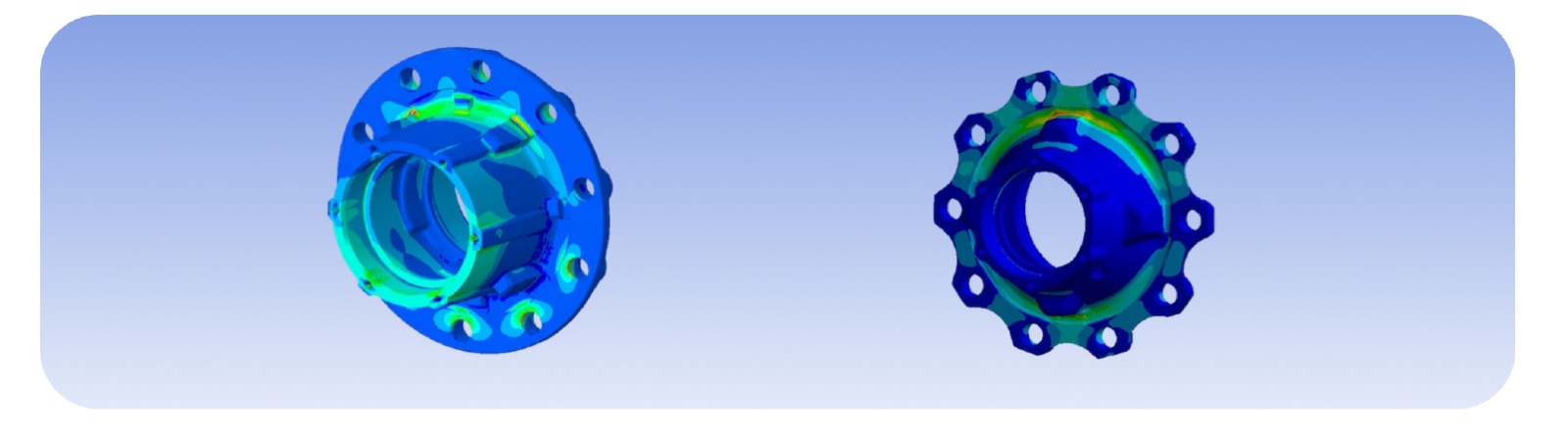
Simulation studies are performed to evaluate critical parameters including shrinkage porosity, air entrapment, hot spots, cold shuts, misruns, and filling behavior. The simulation results are used to optimize tooling design and process parameters, resulting in improved yield, enhanced dimensional stability, and consistent metallurgical integrity.
The simulation process is fully integrated with Rastgar's product realization and quality planning activities, including APQP, DFMEA, PFMEA, PPAP, Control Plans, Process Flow Diagrams (PFD), MSA, SPC, and structured Root Cause Analysis (RCA). This systematic engineering methodology ensures robust process validation, controlled production, and compliance with OEM quality expectations.
By combining simulation-driven engineering with extensive foundry expertise and rigorous process control, Rastgar delivers ductile iron castings with high structural integrity, repeatable quality, and reliable performance for demanding commercial vehicle applications.